Melbourne Business Owners
Melbourne SEO Services for Small Business
“Get a Free Digital Profitability Blueprint – a custom plan to turn your digital marketing into paying customers.”
SEO Melbourne … Full Service SEO (Totally Unique) That Turns Browsers Into Buyers
The plain-English, profit-focused SEO system built for Melbourne-based businesses.
Not vanity metrics. Not jargon. Not “give it 6–12 months and hope for the best”.
Just clear, structured SEO that helps customers find you, trust you, and choose you.

Optimise your Profits.
turn visitors into customers.
Boost your business.
Melbourne Based Digital Marketing Services
“Gain Customers Online provides SEO services for Melbourne businesses focused on increasing qualified traffic, improving conversion rates, and delivering measurable ROI … not vanity rankings.”
Content Marketing to Find Customers
Content That Finds Buyers
AI Automation Melbourne
Automate What Matters
Google Ads Melbourne
Rank Where Buyers Look
Website Conversion (CRO + UX)
Turn Visits Into Sales
Digital Marketing Strategy
Strategy That Guides Growth
Social Media Designed to Sell
Visibility With Intent
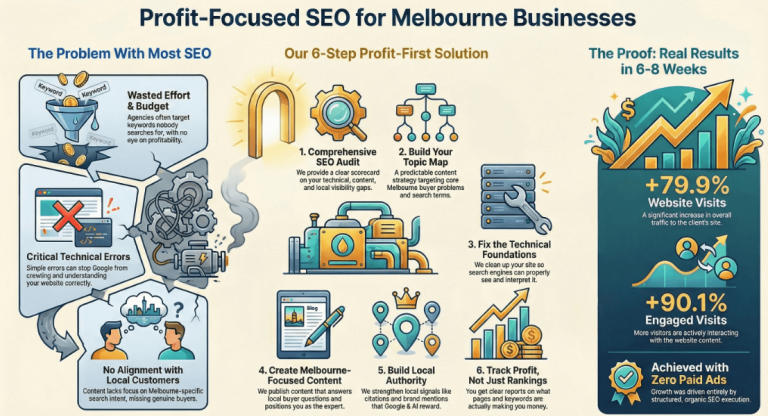
The Problem With Most SEO in Melbourne
Most Melbourne SMEs pay for SEO that’s built for the agency, not the business.
Common issues we see:
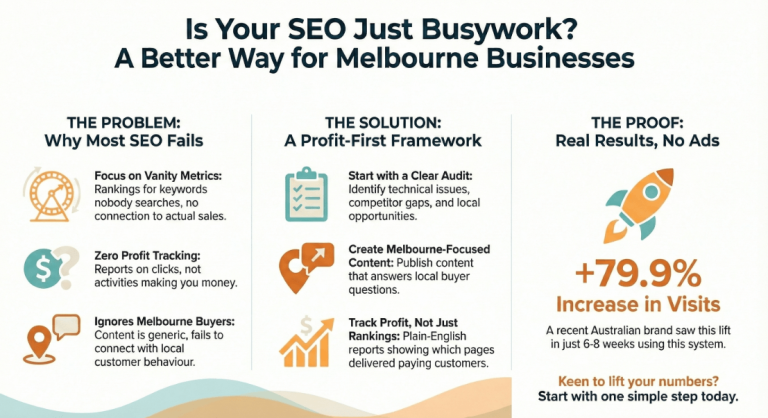
Rankings for keywords nobody searches
Content written just to “look active”
Technical errors that stop Google from crawling your site
No tracking of true profitability
Zero alignment with Melbourne search intent
No plan for Google’s AI Overview (AIO) or generative search
Google’s own documentation is clear:
Better technical signals, website clarity, and helpful content drive search visibility.
Source: https://developers.google.com/search/docs
We fix all of the above from day one.
Melbourne SEO System (How We Actually Do It)
This is your profit-first SEO framework, built for Melbourne based businesses:
Melbourne SEO Audit (Technical + Content + Local Visibility)
SEO inspect for you:
crawl issues
page speed performance
thin content
schema & metadata
broken internal linking
missing Melbourne-specific intent coverage
competitor gaps
AIO readiness
You get a clear scorecard, not a mystery report.
Build Your Topic Map (What Google + AI need from you)
Instead of random blogs, you get mapped:
core buyer problems
Melbourne location intent
service keywords
semantic clusters
entity signals Google needs to “understand” you
This gives you a clean, predictable content strategy.
Fix the Technical SEO (So Google Actually Sees Your Site)
Technical clean up for you:
render-blocking scripts
Core Web Vitals issues
sitemap + robots
structured data
duplicate titles
poor URL structure
Search engines can finally properly interpret the site.
Source: https://web.dev/learn/seo
Create Melbourne-Focused Content That Converts
You get published content that:
speaks to real Melbourne search behaviours
answers buyer questions clearly
positions you as the obvious choice
earns trust before the first phone call
This includes:
service pages
suburb/location SEO
FAQs
how-to guides
value-driving blog posts
Build Local Authority (Signals AI + Google both reward)
We strengthen:
citations
local backlinks
brand mentions
consistency across socials & website
structured Q&A for AI-driven search
This improves both ranking and conversion.
Track Profit, Not Just Rankings
You get information in plain language:
which pages made you money
which keywords brought buyers
where enquiries came from
what’s improving every week
Then we iterate for compounding growth.
Who This Is For?
We get why you’re cautious. You’ve worked with others before, so what’s the difference here? We are not a standard agency. We are your partner with the experience to demand success.
Help Is On The Way For
Melbourne businesses that:
rely on local customers
want predictable lead flow
need their website to pull its weight
have been burned by agencies before
want SEO that drives sales … not vanity metrics
.
Yip You Can Join
Industries we commonly help include:
tradies
professional services
hospitality
local retail
health and wellness
real estate
home improvement
fitness & sport
What You Get With Our Melbourne SEO Service Full SEO Management
Full SEO Management
We handle:
Strategy
Topic mapping
Content creation
Technical fixes
Conversion optimisation
Local authority building
GEO (AI search) optimisation
Weekly improvements
One Flat Monthly Price
No hidden fees. No surprise add-ons.
Aligned With Melbourne Search Intent
You’re competing locally … and we build for that.
Faster Wins + Long-Term Lift
Early momentum comes from:
semantic coverage
GEO downstream effects
direct traffic lift
increased branded searches
improved cross-platform recognition
Full results compound over 3–6 months.
Proof This Works
After 6-8 weeks for a recent Australian brand using the same SEO–GEO workflow:
Visits: +79.9%
Engaged visits: +90.1%
Social discovery: +90.8%
Zero paid ads.
Just structured execution.
Source: internal analytics supplied by the client.
Pricing
“We only work with Victorian businesses and we’re not for everyone.
Start with the free blueprint and we’ll let you know if we’re the right fit.”.